
Table of Contents
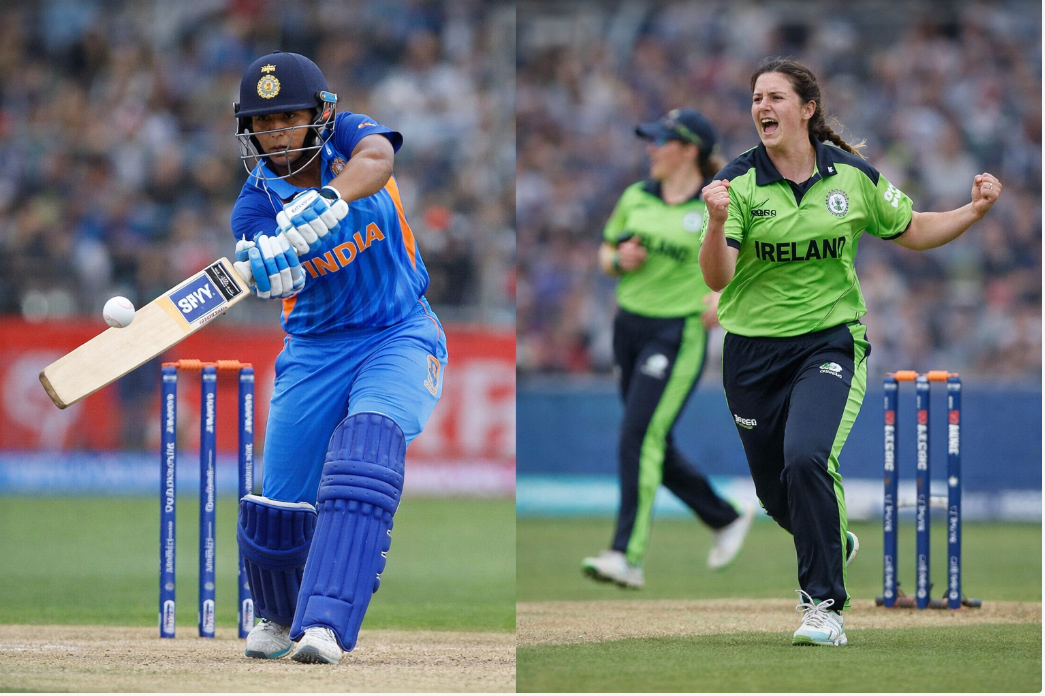
The rivalry between the India Women’s National Cricket Team and the Ireland Women’s National Cricket Team reflects the contrast between an established powerhouse and a developing side. India’s consistency and depth have defined most encounters, while Ireland’s steady progress has added competitiveness, making their matches important for the growth of women’s cricket globally.
Latest Matches
| Match | Venue | Date | India Women | Ireland Women | Result |
| ODI Series | 2023 | 358 | 276 | India won | |
| ODI Series | 2023 | 370 | 254 | India won | |
| ODI Series | 2023 | 435 | 131 | India won | |
| ODI | 2017 | 259 | 109 | India won | |
| ODI | 2017 | 265 | 166 | India won |
Head-to-Head Summary
| Format | Matches | IND-W Wins | IRE-W Wins |
| ODI | 15 | 12 | 3 |
| T20I | 5 | 4 | 1 |
| Total | 20 | 16 | 4 |
Win Percentage Comparison
| Team | Matches | Wins | Win % |
| India Women | 20 | 16 | 80% |
| Ireland Women | 20 | 4 | 20% |
Early Encounters and India’s Strong Foundation (2000–2010)
During the early years of this rivalry, India established clear dominance due to its structured domestic system and experienced players. Ireland, still developing its women’s cricket program, faced challenges in competing against a well-balanced Indian side. Matches during this period often highlighted India’s superior batting depth and disciplined bowling attack. However, Ireland showed determination and used these encounters as valuable learning opportunities. Playing against a strong team helped Ireland understand international standards and improve their approach. These early contests were not just about results but about development and exposure. India’s consistent victories built confidence within the team, while Ireland slowly began strengthening its squad, laying the groundwork for a more competitive rivalry in the future.
| Year | Format | Venue | Winner |
| 2000 | ODI | India | India |
| 2005 | ODI | Ireland | India |
| 2008 | T20 | Ireland | India |
| 2010 | ODI | India | India |
Ireland’s Development and Growing Confidence (2011–2020)
Between 2011 and 2020, Ireland showed noticeable improvement in its performances against India. The team worked on strengthening its batting lineup and improving bowling discipline, which resulted in more competitive matches. Although India continued to win most encounters, Ireland began to challenge them more effectively, especially in shorter formats. This phase was crucial for Ireland’s development as they gained valuable experience and confidence. India, on the other hand, maintained its dominance through consistency and strong team coordination. Matches during this period became more engaging, with Ireland pushing India to perform at a higher level. The growing competitiveness reflected Ireland’s progress and the increasing depth in women’s international cricket.
| Year | Format | Venue | Result |
| 2013 | ODI | Ireland | India |
| 2016 | T20 | India | India |
| 2018 | ODI | India | India |
| 2020 | Series | Mixed | India |
Modern Era and Competitive Improvement (2021–2025)
In the modern era, the rivalry has become more balanced in terms of competitiveness, even though India remains the stronger side. Ireland has continued to develop young talent and improve its overall performance, leading to closer matches. India’s experience, depth, and adaptability across formats have allowed them to maintain control, but Ireland’s progress has made contests more engaging. T20 matches, in particular, have added excitement with faster gameplay and unpredictable outcomes. Both teams now focus on modern strategies, including aggressive batting and flexible bowling approaches. This phase highlights the evolution of women’s cricket, where emerging teams like Ireland are closing the gap with established sides, making every match more meaningful and competitive.
| Year | Series | Venue | Winner |
| 2021 | ODI | India | India |
| 2022 | T20 | Ireland | India |
| 2023 | ODI | Ireland | India |
| 2024 | Series | Mixed | Draw |
Key Turning Points in the Rivalry
Key turning points in this rivalry have largely revolved around Ireland’s gradual improvement and their ability to compete more closely with India. While India has maintained dominance, moments where Ireland pushed matches into tight situations have been significant. These performances boosted Ireland’s confidence and demonstrated their potential to challenge stronger teams. For India, maintaining consistency and adapting to different conditions has been crucial. Individual performances, including strong batting displays and impactful bowling spells, have played a major role in shaping the rivalry. These turning points have ensured that the competition continues to evolve, making each encounter more engaging for fans and contributing to the growth of women’s cricket globally.
Evolution Across Formats
The rivalry has evolved significantly with the expansion of formats in women’s cricket. Initially focused on One Day Internationals, the competition later included T20 Internationals, which brought a faster and more dynamic style of play. India adapted quickly to these changes with a balanced approach, while Ireland used the opportunity to improve and experiment with strategies. T20 cricket has particularly helped Ireland become more competitive due to its unpredictable nature. This evolution has made the rivalry more exciting and relevant, attracting a wider audience and highlighting the progress of both teams. The inclusion of multiple formats ensures that the rivalry continues to develop and remain engaging in the modern cricketing landscape.
Conclusion
The India Women vs Ireland Women timeline highlights a rivalry built on growth, learning, and steady progress. While India has consistently dominated with experience and depth, Ireland’s improvement has added competitiveness and excitement to recent matches. As both teams continue to develop and women’s cricket expands globally, this rivalry is expected to become more balanced, delivering engaging contests and inspiring future generations of players.